I Looked Into Ryokami Sanso
2026-09-24
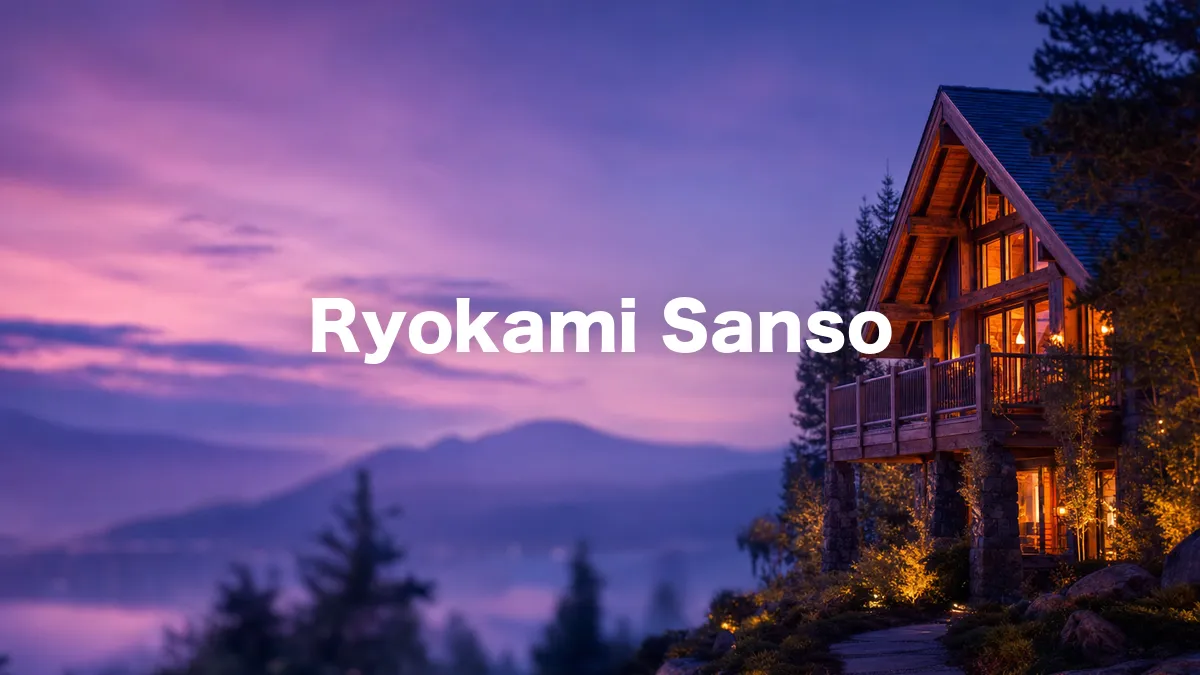
This blog is all about looking into lodges and campsites that catch my interest, one at a time, and this time I've added another one to the list. I've already looked into a few spots in the Chichibu area of Saitama Prefecture, and this is a place I found along the way.
This time I looked into a standalone lodge called Ryokami Sanso. I originally set out to research it under a slightly different name, but as I dug deeper, I realized this lodge right next to the Hinatanya trailhead on Mt. Ryokami seemed to be the actual place, so I made it my official research target. Since I'm a non-driving license holder who doesn't actually drive, the fact that it seemed reachable by bus was a big part of what got me interested in checking it out.
My impression was of a standalone mountain lodge located right in front of the trailhead, seemingly accessible using just trains and buses.
The Rakuten Mobile signal came back as a C rating on the official tool, so it doesn't seem like there's much room to spare.
I've summarized the details below.
What Kind of Place Is Ryokami Sanso?
Ryokami Sanso is apparently a guesthouse/mountain-lodge-type place located right next to the Hinatanya trailhead in the Mt. Ryokami area of Ogano Town, Chichibu District, Saitama Prefecture. It seems to be a standalone lodge that's long been used by climbers of Mt. Ryokami for stays the night before or after their climb. I couldn't find a dedicated official website for it, so I pieced together information from the Ogano Town tourism association's site, mountain-climbing information databases, and personal climbing blogs.
As for access, apparently you take a bus from Seibu-Chichibu Station or Mitsumineguchi Station, transfer partway, get off at the final stop, Hinatanya, and then it's about a two-minute walk from there. For someone like me who doesn't drive, just knowing that 'if you ride the bus to the last stop, you're there' made the place feel a lot less distant psychologically. That said, the buses don't seem to run very frequently, so if you're planning to go, it might be worth checking the timetable in advance.
As for operating periods, some sources describe it as open year-round, while I also found a climbing blog post mentioning that it had switched to summer-only operation at some point. When planning a visit, it seems you can make reservations or check operating status by phone, so it's probably safest to inquire in advance.

Having a lodge right in front of the trailhead means no worrying about getting lost, which actually felt reassuring for an indoorsy type like me. Being able to get there by bus all the way to the final stop is also a big plus.
Checking Out the Rooms, Bath, and Meals
The rooms are Japanese-style, divided by sliding paper doors, and it seems you might end up sharing a room with other guests when it's crowded. As far as I could find, there don't appear to be climber-oriented facilities like a drying room or a self-catering kitchen. Capacity is said to be around 50 people, which suggests a scale closer to a guesthouse than a mountain hut.
For the bath, apparently there's an indoor cypress bath heated using fresh mountain spring water. It seems day-use bathing is also accepted, with a bathing fee of around 500 yen according to one source. Being able to stop by and wash off the sweat after a climb could be a nice option for passersby too.
As for meals, they're apparently centered around wild mountain vegetable dishes and local specialties. One dish frequently mentioned as a specialty is made with a type of rock tripe called iwatake, which is apparently served in things like a sesame-vinegar dressing. There was also a mention of nameko mushroom soup sometimes being served at breakfast. I came across comments praising both the attentiveness of the service and the generous portions, so it might be a bit different from the simple fare you sometimes get at mountain huts.
- Accommodation rates: According to some sources, a stay with two meals runs roughly 8,000 to 9,800 yen, while room-only is around 6,000 yen
- Campsite: There's space for about 50 tents on the grounds, at a cost of 500 yen per person. Restrooms and a water source also appear to be available on site
- Shop: Apparently drinks, light snacks, and climbing badges (including a limited engraved version, it seems) are sold here
- Parking: There's a managed parking lot for climbers, with rates said to be around 500 to 1,000 yen per day. I don't drive so I won't be using it, but it could be useful information for anyone heading there by car
I also came across mentions in a few climbing blogs of a resident dog named Pon who apparently appears as something of a mascot there. Whether you actually get to meet him seems to depend on timing, but little details like this helped me imagine the lodge's atmosphere.
Rakuten Mobile Signal Conditions
When I checked the relevant area in Ogano Town, where this facility is located, using Rakuten Mobile's official "My Area Connectivity Simulation" tool, the overall rating came back as a C.
Given that it's located at a trailhead deep in the mountains, this felt like a result within the expected range, nothing particularly surprising. Since it came back as a C rating, if you're planning to make calls or use data there, it might be worth thinking of a backup option in advance. Reservations for the lodge itself are apparently accepted by phone, so it seems wise to secure a way of contacting them at the last minute that isn't dependent on signal conditions.
Honestly, as a Rakuten Mobile user, a C rating is the kind of result that makes me brace myself a little. It might be somewhat unavoidable for a standalone lodge deep in the mountains, but it's definitely something I'd want to keep in mind ahead of time.
Nearby Sightseeing Spots and Food Worth Checking Out
The area at the foot of Mt. Ryokami where Ryokami Sanso is located seems to have a few sightseeing spots that can be enjoyed depending on the season. About a 15-minute drive away, the Ryokami Sanroku Hana no Sato Dahlia Garden is open from September through November, and apparently offers what's said to be one of the largest dahlia displays in the Kanto region. In winter, the Onouchi Gorge and its Onouchi Hyakkei ice pillars are apparently lit up at night, so it seems like an area where the way you'd enjoy a visit changes quite a bit depending on the season.
There also seem to be nature spots scattered around the area, including Maruga Falls, said to be one of Japan's 100 selected waterfalls, and the Bishamon Spring, listed among the Heisei-era 100 famous waters of Japan. That said, most of these appear to require a walk from a parking area to reach, so as someone who doesn't drive, I felt that taking it easy around the lodge itself might suit me better.
As for food, about a 15-to-20-minute drive away, at the roadside station Ryokami Onsen Yakushi no Yu, you can apparently try Yakushi soba made with local buckwheat flour, as well as waraji katsudon, a local specialty of Ogano. The Ogano branch of Yasudaya, said to be the restaurant where waraji katsudon originated, is also about the same distance away, so it seems like a lot of people combine a stop there with their climb.
Wrapping Up
Pulling it all together, Ryokami Sanso struck me as a standalone lodge memorable for its great location right in front of the trailhead and the convenience of being reachable by bus. With its meals, including dishes made with iwatake, and its cypress bath using fresh mountain spring water, it seems to offer hospitality that feels more like a guesthouse than a mountain hut.
On the other hand, the Rakuten Mobile signal came back with a C rating, so if a reliable connection matters to you, it might be worth knowing that ahead of time. If you're curious, it seems like a good idea to enter your actual destination into Rakuten Mobile's official tool and check for yourself.
This article includes a referral link for Rakuten Mobile's employee referral campaign. For details, please see our Disclaimer & Advertising Notice.
Related.Related Articles
 Chichibu & Nagatoro Area
I Looked Into Juon no Yu
This is a day-use bathing facility attached to PICA Chichibu inside Chichibu Muse Park. It apparently has an indoor bath with a sauna that you can use for day bathing, so I also checked the Rakuten Mobile signal conditions there.
2026-09-24
 Chichibu & Nagatoro Area
I Looked Into Yamaai no Yado Yashiki
A 4-room inn with the charm of an old traditional house overlooking a garden pond, featuring a fully private indoor bath. I checked the Rakuten Mobile signal conditions there.
2026-09-07
 Chichibu & Nagatoro Area
I Looked Into Mission Hills Hotel & Cottage
A hotel and cottage facility attached to Mission Hills Country Club, a golf course in Minano, Chichibu. I also checked the Rakuten Mobile signal conditions.
2026-09-06
 Chichibu & Nagatoro Area
I Looked Into RV Park Smart Nagatoro
An RV park in Nagatoro themed around "the River and Steam Locomotive Village." A facility for car camping and RV users. I also checked Rakuten Mobile signal conditions.
2026-09-06